Quick answer: Cows are pregnant for about 283 days, or roughly nine and a half months. Most beef cows calve between day 279 and day 286 after breeding, and Holstein dairy cows average about 279 days. Enter the breeding or AI date in the calving calculator, or use the cattle gestation table below.
How long are cows pregnant?
The industry benchmark for the cow gestation period is 283 days. Real cows vary by breed, by the sire and by the calf. A useful planning range for most beef herds is about 279 to 286 days.
The sire matters more than many people think. Gestation length is moderately heritable, and the bull passes more of it on than the cow does. Bulls with short gestation figures tend to sire calves that arrive sooner and smaller.
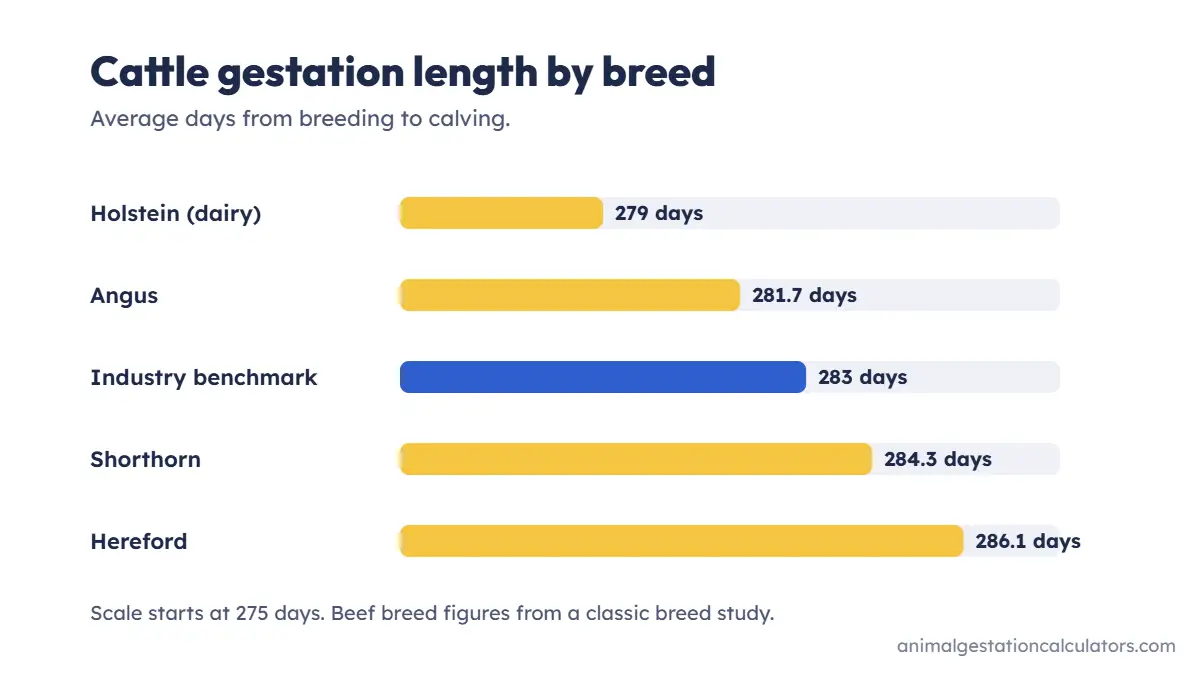
Cattle gestation length by breed
| Breed | Average gestation |
|---|---|
| Holstein | About 279 days |
| Angus | 281.7 days |
| Shorthorn | 284.3 days |
| Hereford | 286.1 days |
Bull calves are usually carried a little longer than heifer calves, about a day on average in one study. Heifers having their first calf also tend to have slightly shorter pregnancies than mature cows.
Cattle gestation table
This cow gestation calendar shows the calving date for each breeding date, using 283 days. The window shows the common 279 to 286 day range:
| Bred on | Calves due | Normal window |
|---|---|---|
| Jan 1 | Oct 11 | Oct 7 – Oct 14 |
| Jan 8 | Oct 18 | Oct 14 – Oct 21 |
| Jan 15 | Oct 25 | Oct 21 – Oct 28 |
| Jan 22 | Nov 1 | Oct 28 – Nov 4 |
| Feb 1 | Nov 11 | Nov 7 – Nov 14 |
| Feb 8 | Nov 18 | Nov 14 – Nov 21 |
| Feb 15 | Nov 25 | Nov 21 – Nov 28 |
| Feb 22 | Dec 2 | Nov 28 – Dec 5 |
| Mar 1 | Dec 9 | Dec 5 – Dec 12 |
| Mar 8 | Dec 16 | Dec 12 – Dec 19 |
| Mar 15 | Dec 23 | Dec 19 – Dec 26 |
| Mar 22 | Dec 30 | Dec 26 – Jan 2 |
| Apr 1 | Jan 9 | Jan 5 – Jan 12 |
| Apr 8 | Jan 16 | Jan 12 – Jan 19 |
| Apr 15 | Jan 23 | Jan 19 – Jan 26 |
| Apr 22 | Jan 30 | Jan 26 – Feb 2 |
| May 1 | Feb 8 | Feb 4 – Feb 11 |
| May 8 | Feb 15 | Feb 11 – Feb 18 |
| May 15 | Feb 22 | Feb 18 – Feb 25 |
| May 22 | Feb 29 | Feb 25 – Mar 3 |
| Jun 1 | Mar 10 | Mar 6 – Mar 13 |
| Jun 8 | Mar 17 | Mar 13 – Mar 20 |
| Jun 15 | Mar 24 | Mar 20 – Mar 27 |
| Jun 22 | Mar 31 | Mar 27 – Apr 3 |
| Jul 1 | Apr 9 | Apr 5 – Apr 12 |
| Jul 8 | Apr 16 | Apr 12 – Apr 19 |
| Jul 15 | Apr 23 | Apr 19 – Apr 26 |
| Jul 22 | Apr 30 | Apr 26 – May 3 |
| Aug 1 | May 10 | May 6 – May 13 |
| Aug 8 | May 17 | May 13 – May 20 |
| Aug 15 | May 24 | May 20 – May 27 |
| Aug 22 | May 31 | May 27 – Jun 3 |
| Sep 1 | Jun 10 | Jun 6 – Jun 13 |
| Sep 8 | Jun 17 | Jun 13 – Jun 20 |
| Sep 15 | Jun 24 | Jun 20 – Jun 27 |
| Sep 22 | Jul 1 | Jun 27 – Jul 4 |
| Oct 1 | Jul 10 | Jul 6 – Jul 13 |
| Oct 8 | Jul 17 | Jul 13 – Jul 20 |
| Oct 15 | Jul 24 | Jul 20 – Jul 27 |
| Oct 22 | Jul 31 | Jul 27 – Aug 3 |
| Nov 1 | Aug 10 | Aug 6 – Aug 13 |
| Nov 8 | Aug 17 | Aug 13 – Aug 20 |
| Nov 15 | Aug 24 | Aug 20 – Aug 27 |
| Nov 22 | Aug 31 | Aug 27 – Sep 3 |
| Dec 1 | Sep 9 | Sep 5 – Sep 12 |
| Dec 8 | Sep 16 | Sep 12 – Sep 19 |
| Dec 15 | Sep 23 | Sep 19 – Sep 26 |
| Dec 22 | Sep 30 | Sep 26 – Oct 3 |
Why does gestation length matter?
Every extra day in the womb adds at least a pound to the calf, and more in large-calf breeds. A longer pregnancy can mean a heavier calf and a harder birth, especially for heifers.
It also affects rebreeding. To keep a 365-day calving interval, a cow has only about 80 days after calving to get pregnant again.
Signs a cow is about to calve
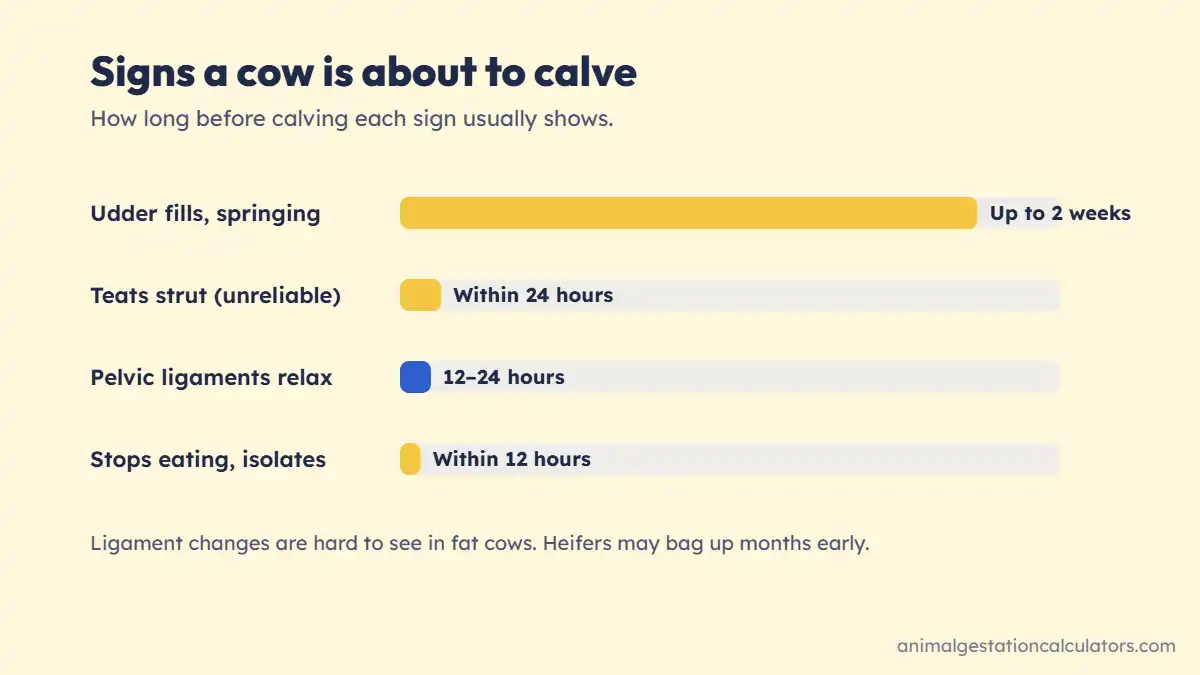
- Up to 2 weeks before: her udder fills and the area around the vulva swells. Heifers may start bagging up two to three months early.
- 12 to 24 hours before: the pelvic ligaments relax, so the tailhead looks sunken. This is hard to see in fat cows.
- Within 24 hours: the teats may strut, though this sign is unreliable.
- Within 12 hours: she may stop eating and move away from the herd.
How long does calving take, and when should you help?
The first stage, when the cervix opens, usually takes 4 to 24 hours. Once the water bag or feet appear, a heifer typically calves in about an hour and a mature cow in about 30 minutes.
- Check a heifer that has made no real progress one hour after the water bag or feet appear.
- Check a cow after about 30 minutes without progress.
- If you cannot fix a problem within 20 to 30 minutes, call your vet.
- The afterbirth should pass within 12 hours. After that it is retained and needs attention.
The calving guidance follows Oklahoma State University Extension. For other livestock, see our pig gestation calculator or the horse gestation calculator. Small ruminants run much shorter: about 147 days for sheep.
Frequently asked questions
How many months is a cow pregnant?
About nine and a half months. At 283 days, a cow bred on January 1 calves around October 11.
What is the longest a cow has been pregnant?
Cows sometimes go a week or more past 283 days, especially with bull calves or long-gestation breeds. If she goes well past her window or shows signs of trouble, call your vet.
Are heifers pregnant for less time?
Usually a little less. First-calf heifers tend to have slightly shorter pregnancies than mature cows.
How do I calculate a calving date from AI?
Use the insemination date as day 0 and add 283 days, or the gestation figure listed for the sire you used. The calculator above does this for you. To time the insemination itself, see the cow heat cycle guide.
Do dairy cows have shorter pregnancies?
Holsteins average about 279 days, a few days shorter than many beef breeds.
Can a cow calve early and the calf be fine?
A few days early is usually fine. A calf born a week or more ahead of the window may be weak and need extra care, so watch it closely and call your vet if it struggles to stand or suck.