Quick answer: A dog’s heat lasts about two to three weeks and comes around roughly every six months. She bleeds for about the first 9 days and is fertile for about the next 9. Most dogs have their first heat at about 6 months old, but large and giant breeds can take up to 2 years.
What is the dog heat cycle?
The heat cycle is how a female dog’s body prepares for pregnancy. It has four stages. Only the first two, when she bleeds and then becomes fertile, are what people mean by “in heat.”
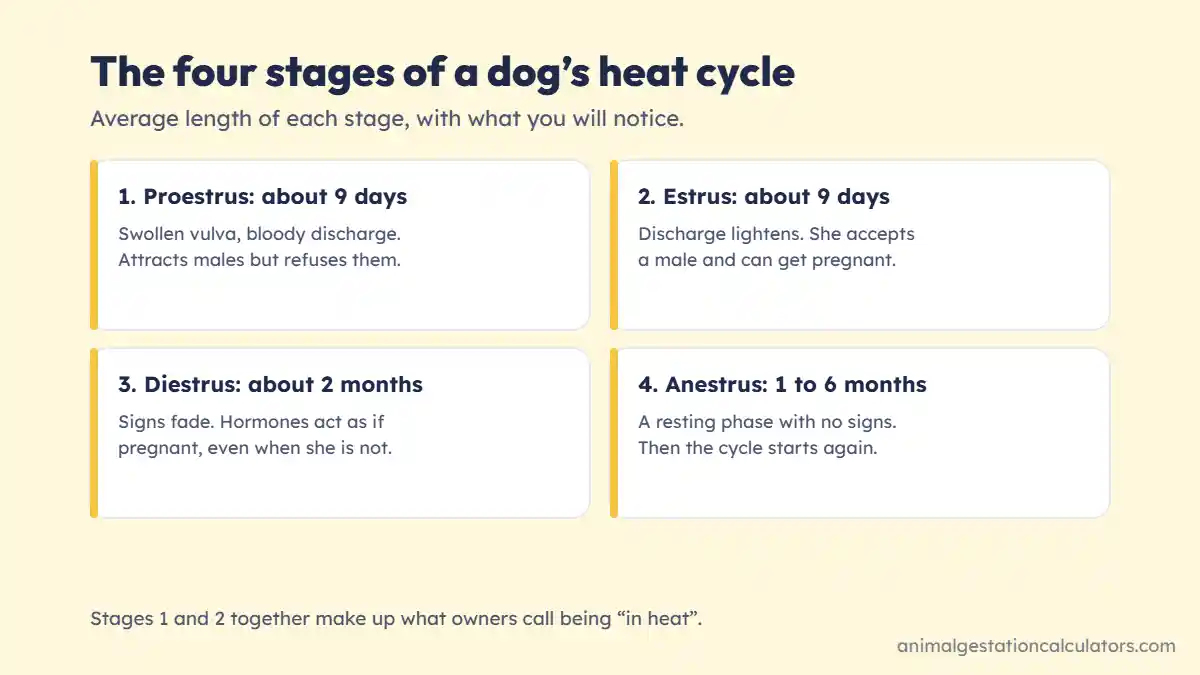
| Stage | Average length | What happens |
|---|---|---|
| Proestrus | About 9 days (2 days–3 weeks) | Vulva swells, bloody discharge, males are interested but she says no |
| Estrus | About 9 days (3 days–3 weeks) | Discharge turns lighter, she accepts males, ovulation happens |
| Diestrus | About 2 months | Signs fade; her hormones behave like pregnancy either way |
| Anestrus | 1–6 months | A quiet rest before the next heat |
How long is a dog in heat?
Most dogs stay in heat for two to three weeks, counted from the first sign of bleeding until she stops attracting males. The two heat stages each average 9 days, but either one can be as short as 2 to 3 days or as long as 3 weeks. So when people ask how long dogs are in heat, two to three weeks is the honest average.
How long do dogs bleed in heat?
Most dogs bleed for about 7 to 10 days, during proestrus. The discharge starts quite red, then thins and turns pink or straw-colored when she becomes fertile. Some dogs bleed very little and keep themselves clean, so owners can miss the start.
Unlike people, dogs bleed before they ovulate, not after. So the end of bleeding does not mean the risk of pregnancy is over. It usually means the fertile days are just beginning.
How often do dogs go into heat?
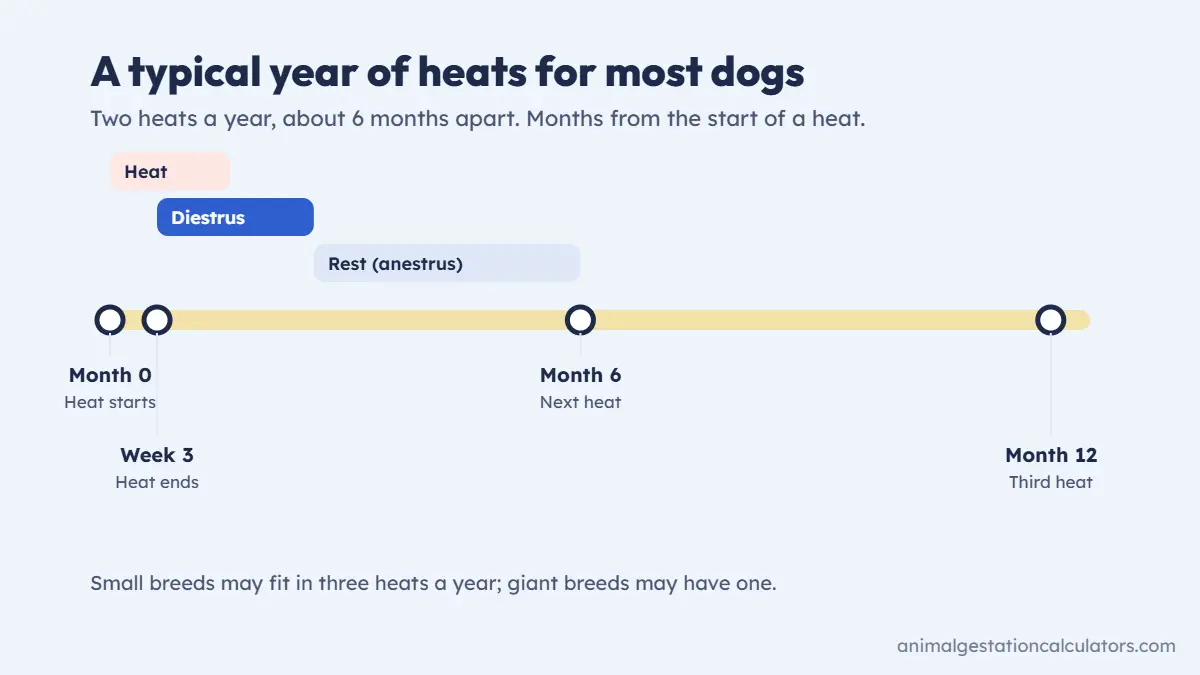
Most dogs come into heat about twice a year. The average gap is 7 months, and anywhere from 4 to 13 months can be normal. Small breeds may cycle three times a year, and giant breeds once.
Want dates for your own dog? Our dog heat cycle calculator predicts her next heat and fertile days.
When do dogs go into heat for the first time?
The average is about 6 months. Small breeds often start earlier, while large and giant breeds may not cycle until 18 months to 2 years. First cycles are often short, light or irregular, and it can take up to two years for a regular pattern to settle in.
What are the signs a dog is in heat?
- A swollen, larger vulva
- Bloody, then lighter, discharge
- Peeing more often, or marking in small amounts
- Licking her rear end more than usual
- Male dogs showing strong interest in her
- Changes in mood, from clingy to restless
- In estrus, moving her tail aside and standing still when touched near the tail

How can you help a dog in heat?
- Keep her safe from males. Walk her on a leash, avoid dog parks and never leave her alone in the yard. A determined male can get over or under a fence.
- Protect your home. Washable dog pants or diapers and a covered bed help with spotting.
- Keep her clean. A gentle wipe is enough. Most dogs groom themselves well.
- Give her calm time. Extra rest, chew toys and a quiet spot help if she is restless.
Do dogs have periods like humans?
Not quite. A dog’s bleeding comes before she ovulates and signals that she is getting ready to mate. A human period comes after ovulation, when no pregnancy happened. Dogs also cycle far less often, only once or twice a year.
When should you call the vet about her heat?
- Bleeding lasts much longer than three weeks.
- She has a thick, smelly or pus-like discharge, or drinks and pees much more than usual, in the weeks after a heat. This can be a sign of a serious womb infection.
- An adult dog has not had a heat in over a year and is not spayed.
- She may have mated, and you want to know your options.
If she did mate, see how to tell if your dog is pregnant. If she did not, but she starts nesting or making milk a month or two later, it may be a false pregnancy. You can read more on estrus cycles in dogs from a veterinary hospital group.
Frequently asked questions
How do you know when a dog’s heat is over?
The discharge has stopped, her vulva is back to its normal size and males lose interest in her. Wait a few extra days after that before letting her near intact males.
Can a dog get pregnant after bleeding stops?
Yes. The end of heavy bleeding is often when she becomes fertile, so this is the riskiest time for an accidental mating. If it happens, expect puppies about nine weeks later; see how long dogs are pregnant.
Is it painful for a dog to be in heat?
Most dogs do not seem to be in pain, though some are a little uncomfortable, tired or moody. Contact your vet if she seems in real pain or stops eating.
Can a dog go into heat twice in a short time?
Sometimes a young dog has a “split heat”: signs start, stop, then return a few weeks later. It usually settles as she matures. Ask your vet if it keeps happening.
Do dogs stop going into heat when they get old?
No. Dogs do not go through menopause. Older dogs keep cycling, though the gaps may get longer and the signs lighter.
Should I spay my dog before her first heat?
The best timing depends on her breed, size and health. Talk it through with your vet, who can weigh the benefits and risks for your dog.