Quick answer: Farm animal pregnancies range from about 115 days in pigs to about 365 days in donkeys. Sheep carry for about 147 days, goats 150, cows 283, horses 340, and alpacas and llamas about 342. Most give birth to one baby, but goats, sheep and especially pigs often have more.
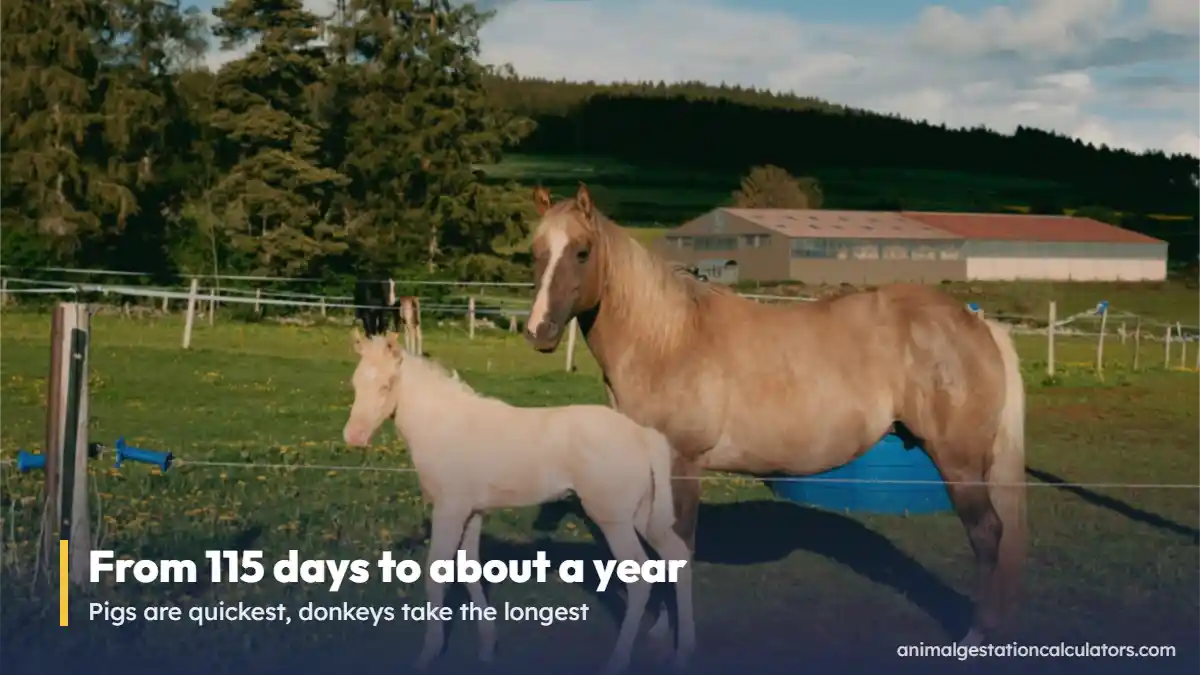
How long are farm animals pregnant?
The table lists the average, the normal range and the usual number of young for each animal. Each name links to a calculator that turns a breeding date into a due date and a calendar of key dates.
| Animal | Average | Normal range | Usual young | Due date tool |
|---|---|---|---|---|
| Pig | 115 days | 114 to 117 days | A large litter, often 10 or more | Pig calculator |
| Sheep | 147 days | 144 to 152 days | 1 to 3 lambs, twins common | Sheep calculator |
| Goat | 150 days | 145 to 155 days | 1 to 3 kids, twins common | Goat calculator |
| Cow | 283 days | 279 to 286 days | 1 calf | Cow calculator |
| Horse | 340 days | 320 to 370 days | 1 foal | Horse calculator |
| Alpaca or llama | 342 days | 332 to 352 days | 1 cria, twins very rare | Alpaca and llama calculator |
| Donkey | 365 days | 345 to 385 days | 1 foal | Donkey calculator |
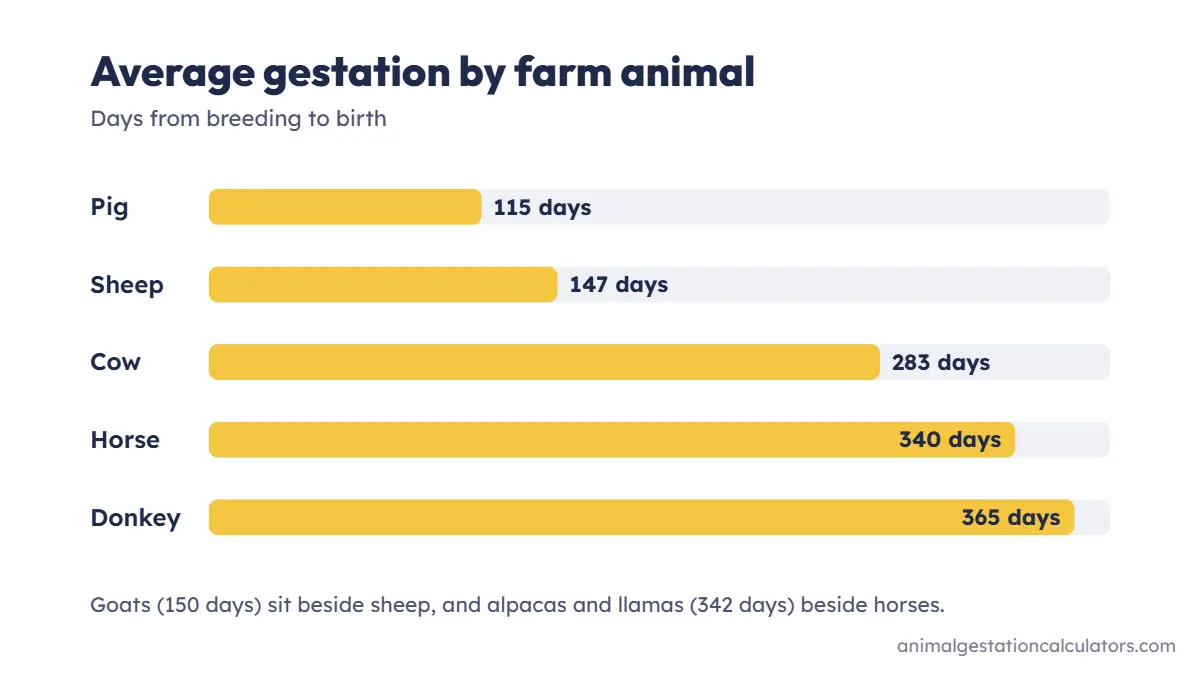
The ranges are wide for horses and donkeys. A healthy mare can foal three weeks either side of her average, so plan for a window, not a single day.
When can farm animals be bred?
It depends on whether the animal breeds all year or only in a season. Cows and pigs cycle about every 21 days all year. Horses come into heat from spring to early fall, as days lengthen. Goats and sheep cycle as days get shorter, from late summer into winter.
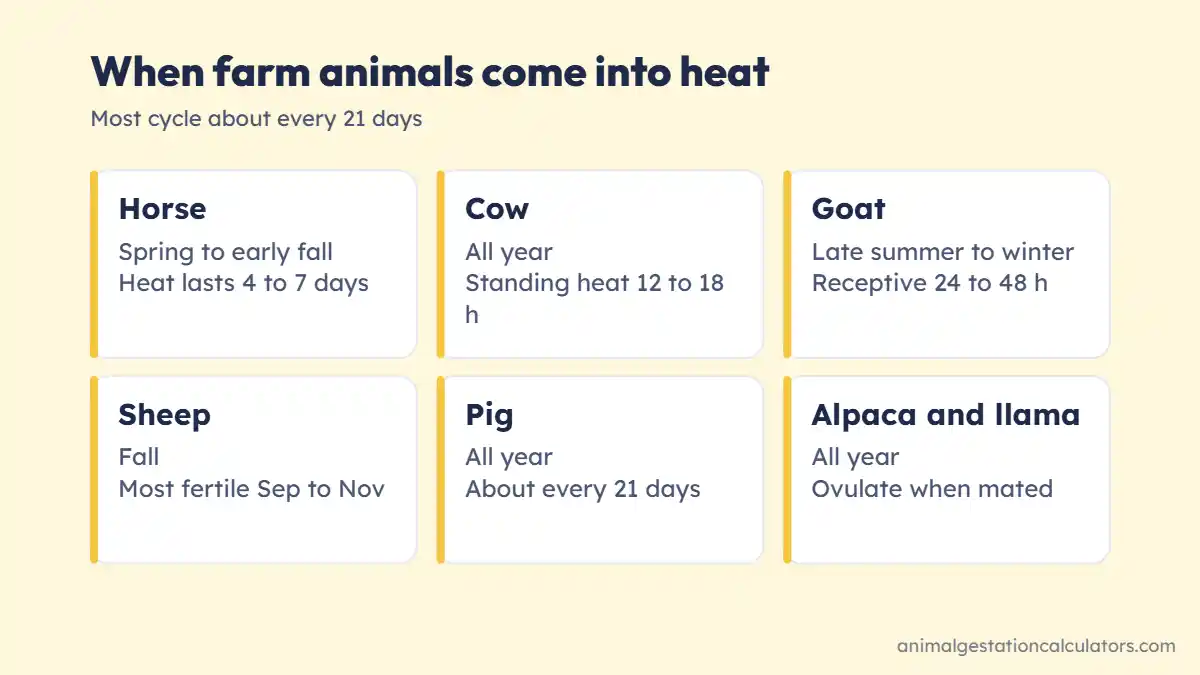
Alpacas and llamas are different again. They don’t have a regular heat cycle and ovulate when they mate, so they can be bred at any time of year. To time breeding, use the horse heat cycle, cow heat cycle or goat heat cycle calculators.
How do you plan the birth month?
Work backward from when you want the young born. Pick the target birth date, then subtract the average gestation. That gives you the date to breed.
- Calves in March: breed in early June, about 283 days before.
- Foals in April: breed in May of the year before, about 340 days earlier.
- Kids or lambs in March: breed in early October, about 150 days before.
- Piglets in May: breed in late January, about 115 days before.
For seasonal breeders, check the target falls inside their breeding season. A March lamb is easy to plan, but a lamb in September usually is not.
What signs show birth is close?
Most farm animals show similar signs in the last days. The udder fills, often called bagging up. The muscles and ligaments around the tail head relax. Many females get restless and move away from the herd to give birth alone.
Each species has its own extra clues and timing. Mares often show wax on their teats a day or two before foaling. Sows build a nest. Each calculator page lists the signs and the times when you should call a vet.
For a single reference list, the Merck Veterinary Manual has a table of approximate gestation periods for domestic animals.
Frequently asked questions
Which farm animals often have twins?
Goats and sheep. Twins are common in both, and triplets happen too. Cows have twins now and then. Twins are rare and risky in horses and very rare in alpacas.
What is the best time of year to breed farm animals?
Most farms aim for spring births, when grass, weather and daylight help the young thrive. Work back from your target month using each animal’s gestation.
Do pregnant farm animals need extra feed?
Mostly in the last third of pregnancy, when the unborn young grow fastest. Raise feed slowly and keep her in good, not fat, condition. Your vet or an extension office can help set amounts.
Should a pregnant animal be moved away from the herd?
Near her due date, yes. A clean, quiet pen or paddock where you can watch her makes birth safer and helps you spot trouble early.
What breeding records should I keep?
Write down each heat, the breeding dates and the male used. With those dates, a calculator can give you a due date window and remind you when to get ready.
Why does my calculator give a window, not one date?
Because healthy pregnancies vary. A cow can calve a few days either side of 283 days, and a mare can foal weeks early or late. Get ready at the start of the window.